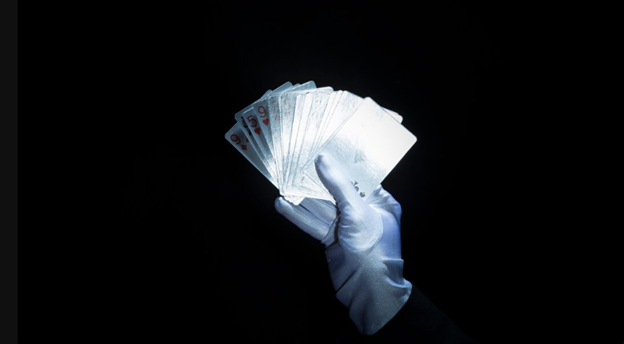
The phone rings at 2 a.m., and you already know before you answer it that your life just changed. Or maybe it’s a letter in the mailbox, a doctor’s voice on the other end of a call, a door that slams shut on a plan you’d spent years building. You didn’t ask for this card. Nobody deals you a hand and asks permission first.
When Life Deals You a Card You Didn’t Ask For
Here’s a line worth sitting with: “Fate never deals you cards you can’t use.” It sounds simple, almost too simple, until you actually test it against something hard. Most of us grow up believing bad luck is something that just happens to us — a random gut-punch we absorb and move past. This idea insists on something tougher and more useful: every hand, even the one that wrecks your plans, comes with material you can build from. That’s not toxic positivity. It’s a practical claim about how humans actually function under pressure. And once you start looking for it, you’ll notice this philosophy showing up everywhere — in comeback stories, in career pivots, in the quiet resilience of people who refused to let one bad hand define the whole game. This post is about testing that claim and figuring out why it holds up.
What “Unusable Cards” Actually Look Like
Let’s get specific, because vague inspiration doesn’t help anyone. Life deals a few recognizable types of hard cards, and they usually show up in three stages.
The card you didn’t choose
This one arrives without warning: a layoff you didn’t see coming, a diagnosis that rearranges every plan you had, a relationship that ends before you’re ready. You have zero say in the deal itself. That’s the part that feels unfair, and honestly, it is unfair. Nobody’s pretending otherwise.
The moment of choice
Right after the shock, there’s a split second most people rush past — the gap between reacting and deciding. You can spend that gap spiraling, or you can spend it asking a better question: okay, what do I actually have here? That single shift in framing is where everything changes.
The hand you build from it
This is where adaptability as a skill actually earns its keep. The setback doesn’t disappear. It becomes raw material instead — something you shape rather than something that shapes you. People who lose jobs start companies. People who go through breakups discover parts of themselves they’d buried for years. The card stays the same. What you build with it doesn’t have to.
Why This Mindset Actually Works: The Psychology of Adaptability
This isn’t just a nice sentiment you post on Instagram — there’s real psychology behind why some people bounce back, and others get stuck.
Constraints force creativity. When researchers study problem-solving, they consistently find that limitations often produce more inventive solutions, not fewer, because you can’t rely on the obvious path anymore.
Adaptability compounds over time. Someone who’s practiced improvising in one area of life — a musician riffing through a mistake, an athlete adjusting mid-play — builds a mental toolkit they can pull from later, in completely unrelated crises. Adaptability as a skill doesn’t stay in its lane. It transfers.
Repurposing beats enduring. Resilience often gets framed as gritting your teeth and getting through something. Adaptability goes a step further — it takes the bad hand and turns it into fuel. One survives the storm. While the other learns to sail in it.
Think about anyone you admire for how they handled a crisis. Chances are, they didn’t just tolerate it. They found a way to use it.
Practicing Adaptability Before You Need It
You don’t want to discover you lack this skill in the middle of the worst week of your life. Build it now, in low-stakes moments, so it’s ready when the stakes get real.
– Say yes to situations with no script — a new city, an unfamiliar project, a conversation you can’t fully prepare for
– Treat small setbacks as puzzles instead of failures, and ask “what can I use here?” instead of “why me?”
– Surround yourself with people who reframe problems quickly; adaptability rubs off
– Practice making decisions with incomplete information — waiting for certainty is often the real trap
Every one of these builds the same muscle: adaptability as a skill you can call on later, when you actually need it.
The Real Question Isn’t Fairness
Here’s the uncomfortable truth: nobody gets to choose their hand. The job loss, the diagnosis, the war, the breakup — none of it asks permission first. But fairness was never really the point. The people who come out the other side stronger aren’t the ones who got dealt better cards. They’re the ones who figured out how to use the ones they had. That’s the whole philosophy in one sentence, and it applies whether you’re facing a rough Tuesday or the fight of your life.
Tested Under Real Stakes
This idea sounds good on paper, but it’s worth asking: does it actually hold up when the stakes are life and death? In 1968, a 19-year-old musician named J Curtis Marlatt got his draft notice and watched a life he’d built — a rising rock band, a swimming scholarship, a front-row seat to the Summer of Love — disappear overnight. Rather than wait for fate to decide his future, he made a choice: enlist and try to shape what came next. What followed was a war memoir unlike most others — one where a stolen guitar, a band formed between mortar attacks, and a mindset of pure adaptability became the tools that got him home. It’s proof this philosophy doesn’t just sound nice. It also works.
Want to see adaptability as a skill tested against real jungle warfare? Grab Cap’n Zig Zag’s Blues Band by J Curtis Marlatt. A true story of music, grit, and survival you won’t be able to put down.